

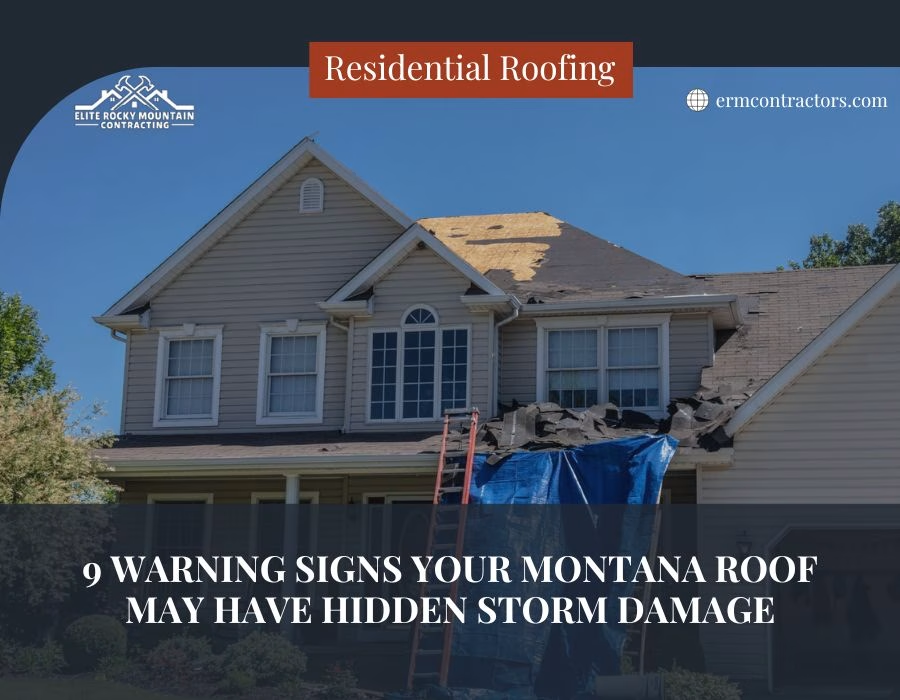
Storm damage roof can be much harder to detect than homeowners expect. After a severe thunderstorm, hailstorm, or period of strong winds, your roof may look perfectly normal from the ground while still having damage that can eventually lead to leaks, moisture problems, and expensive repairs.
Montana homeowners deal with a wide range of weather conditions throughout the year, including strong winds, hail, heavy rain, snow, and rapid temperature changes. These conditions can place significant stress on roofing systems. The National Weather Service has issued severe thunderstorm warnings across Montana involving damaging wind gusts and hail, with roof damage listed among the expected impacts.
The challenge is that not every problem appears immediately. Some storm damage affects shingles, flashing, ventilation components, or other parts of the roofing system without creating an obvious leak right away.
Knowing what to look for after severe weather can help Montana homeowners identify potential problems before they become more expensive.
Here are nine warning signs of storm damage your Montana roof may have.
1. Missing or Lifted Shingles
One of the easiest signs of storm damage to recognize is missing or lifted shingles.
Strong winds can loosen roofing shingles, break their seals, or lift their edges. In more severe situations, entire shingles may be blown off the roof and found in the yard, driveway, gutters, or other areas around the property.
However, shingles do not always have to disappear completely for wind damage to occur.
A shingle can remain attached while its edges are lifted or its seal is broken. From the ground, this damage may be difficult to see, especially on a steep roof or from certain viewing angles.
Look for:
- Missing shingles
- Shingles that appear uneven
- Raised or curled shingle edges
- Exposed underlayment
- Shingles scattered around the property
- Areas where the roof surface looks inconsistent
Even a small damaged section can allow water to reach areas underneath the roofing material.
If you notice missing or lifted shingles after a storm, a professional inspection can determine whether the affected area needs repair or whether additional damage exists elsewhere on the roof.
2. Granules Collecting in Gutters or Downspouts
Another potential sign of storm damage is an unusual amount of roofing granules accumulating in your gutters.
Asphalt shingles are covered with protective granules that help shield the roofing material from weather and ultraviolet exposure. Hail impacts and severe weather can loosen these granules.
A few granules in a gutter are not necessarily a reason for immediate concern, particularly on an older roof. However, a noticeable increase in granule accumulation after a major storm may indicate that the shingles have experienced impact or surface damage.
Check your gutters and downspouts after severe weather.
If you notice significantly more granules than usual, especially when the increase follows a hailstorm, consider having the roof professionally inspected.
Hail damage can sometimes be difficult to identify without getting close to the roofing surface. Walking on a roof yourself can also create additional risks, particularly when shingles are already damaged.
3. Small Bruises, Cracks, or Dents on Shingles
Hail can cause damage that is not immediately obvious.
A hailstone can strike a shingle and create a bruise, indentation, crack, or weakened area. The roofing material may remain in place, meaning the roof can still appear intact from the ground.
Over time, however, damaged areas may become more vulnerable to moisture and weather exposure.
This is one reason homeowners should not assume that a roof is undamaged simply because no shingles are missing.
When inspecting from a safe location, look for unusual dark spots, irregular areas, exposed roofing material, or visible dents. A professional roofing inspection can provide a much more thorough evaluation.
If your Montana property recently experienced hail, having the roof inspected can help identify problems before they develop into active leaks.
4. Water Stains on Ceilings or Interior Walls
Sometimes the first evidence of storm damage is not on the roof at all.
It may appear inside your home.
Brown, yellow, or discolored areas on ceilings and walls can indicate water intrusion. You may also notice bubbling paint, peeling surfaces, damp insulation, or a musty odor in an attic or upper-level room.
Water does not always enter the home directly underneath the point where the roof is damaged. It can travel along roofing materials, decking, insulation, framing, or other components before becoming visible inside.
That means an interior water stain should not automatically be treated as a simple ceiling problem.
If a stain appears shortly after a major storm, the roof should be evaluated to determine whether damaged shingles, flashing, vents, or another roofing component allowed water to enter.
According to the Insurance Information Institute, even a small roof leak can result in widespread water damage, mold, and mildew if the underlying problem is not addressed.
5. Damaged or Loose Roof Flashing
Roof flashing is installed around vulnerable areas where water could otherwise enter the roofing system.
Common flashing locations include:
- Chimneys
- Skylights
- Roof valleys
- Vents
- Walls
- Roof edges
- Other roof-to-wall transitions
Because these areas are especially important for water protection, damaged flashing can become a serious concern after severe weather.
Strong winds can loosen flashing, while hail and falling debris can dent or damage exposed components. In some cases, flashing may appear slightly displaced without creating an immediate visible leak.
If you notice loose metal, gaps, bent flashing, or separation around roof penetrations, it is worth having the area inspected.
A small flashing problem can become a much larger moisture issue when repeated rainfall gives water an opportunity to enter the roofing assembly.
6. Damaged Gutters, Downspouts, or Roof Edges
Storm damage is not limited to the main roof surface.
Gutters, downspouts, fascia, soffits, and roof edges can also be affected by strong winds, hail, falling branches, and flying debris.
Look around the outside of your home after a storm for:
- Bent gutters
- Detached downspouts
- Loose fascia
- Damaged soffits
- Cracked exterior components
- Debris around roof edges
- Sections that appear separated or displaced
Damage around the roof perimeter can sometimes indicate that the storm affected nearby roofing components as well.
For example, a gutter that has been pulled away from the home may indicate that strong wind affected the roof edge or surrounding exterior materials.
Because the roof, gutters, fascia, and drainage system work together, problems in one area can contribute to problems in another.
7. Debris or Tree Damage on the Roof
Falling branches are another common source of storm damage.
A branch does not have to create a large visible hole to cause a problem. It can crack shingles, damage flashing, puncture roofing materials, or weaken the roof deck underneath.
After a major storm, inspect the property from a safe location for:
- Tree branches on the roof
- Broken limbs near the home
- Leaves or debris concentrated in one roof area
- Damaged gutters
- Visible punctures
- Broken roofing materials
If a large branch has fallen onto the roof, avoid climbing onto the structure yourself.
The roof may be structurally compromised, and hidden damage may exist underneath the visible debris. A professional can evaluate the area and determine whether additional inspection or repairs are necessary.
8. New Attic Moisture or Unusual Dampness
The attic can provide important clues about hidden storm damage.
If it is safe to access your attic, look for signs such as:
- Damp insulation
- Water stains on wood
- Wet decking
- Mold or mildew
- Dripping water
- Unusual moisture
- Daylight visible through areas that should be sealed
Not every attic moisture problem is caused by storm damage. Poor ventilation, condensation, insulation problems, and other issues can also contribute to moisture.
However, if you notice new moisture after a severe storm, the timing deserves attention.
A damaged roof may allow water to enter the roofing system before it eventually becomes visible on a ceiling or wall.
This is especially important because hidden moisture can continue causing damage even when the roof looks acceptable from outside.
9. A Roof That Looks Different After the Storm
Sometimes the warning sign is simply that something looks different.
You may notice:
- A section that appears darker
- Shingles that no longer line up correctly
- A visibly uneven roof surface
- A sagging area
- Missing materials
- Exposed underlayment
- New damage around vents or chimneys
- A change in the appearance of one roof slope
Homeowners who know what their roof looked like before a storm are often in the best position to notice these changes.
Take photographs of your roof and exterior periodically from safe ground-level locations. Having before-and-after photos can make it easier to recognize changes following severe weather.
If something looks noticeably different after a storm, do not ignore it simply because the roof is not actively leaking.
Hidden problems can become more serious with every additional rainfall or weather event.
Why Hidden Storm Damage Should Not Be Ignored
Storm damage does not always create an immediate emergency.
A small area of damaged shingles may not leak during the first rainfall. A loose piece of flashing may remain in place for weeks. Hail damage may weaken a shingle without immediately creating a visible opening.
The problem is that roofing systems are designed to work as a complete protective system. When one component is compromised, water and weather can gradually exploit that weakness.
Over time, untreated storm damage may contribute to:
- Roof leaks
- Damaged insulation
- Mold and mildew
- Rotting roof decking
- Interior ceiling damage
- Wall damage
- Reduced roof lifespan
- More expensive repairs
The Insurance Information Institute notes that a roof protects a home from hazards including wind, hail, and water, and that the condition of the roof can influence the risk of interior damage.
That makes a post-storm inspection an important part of protecting your home.
When Should You Schedule a Montana Roof Inspection?
A professional roof inspection is especially important after a storm involving strong winds, hail, falling branches, or heavy rainfall.
You should consider an inspection if:
- Your neighborhood experienced significant hail
- You noticed missing or damaged shingles
- You found roofing granules in your gutters
- Your ceiling developed new stains
- Your attic has new moisture
- Trees or branches struck your property
- Flashing appears loose or damaged
- Your roof looks different after the storm
- You are unsure whether your roof sustained damage
You do not necessarily need to wait for a leak before having the roof evaluated.
In fact, identifying damage early can give you more options for addressing the problem before it develops into a larger roofing or interior repair.
What to Do After Discovering Storm Damage
If you believe your roof has suffered storm damage, start by documenting what you can safely observe from the ground.
Take photographs of visible damage to the roof, gutters, siding, trees, and other exterior areas. Keep notes about when the storm occurred and when you first noticed the damage.
Avoid climbing onto the roof yourself, particularly if the roof is wet, steep, damaged, or covered with debris.
The next step is to have the roof evaluated by a qualified roofing professional.
A professional inspection can identify visible and less obvious problems and help determine whether the appropriate solution is a repair or a larger roofing project.
If you plan to contact your insurance company, keep your documentation and review your policy carefully. Insurance coverage varies by policy, and homeowners should confirm which types of storm damage are covered. The Insurance Information Institute notes that windstorm and hail are commonly covered perils under standard homeowners policies, but specific coverage depends on the policy.
How Elite Rocky Mountain Contracting Can Help With Storm Damage
When storm damage affects your roof, getting an accurate assessment is an important first step.
Elite Rocky Mountain Contracting provides storm damage support that includes roof inspections, documentation, damage reports, estimates, and professional restoration. The company also assists homeowners through the contractor side of the insurance claim process.
Their storm damage process includes a free roof inspection, documentation of damage, estimate preparation, repair coordination, professional restoration, and a final inspection.
If you are unsure whether your roof has hidden storm damage, a professional inspection can help you understand the condition of your roofing system and determine what should happen next.
For homeowners looking specifically for professional roof repair, Elite Rocky Mountain Contracting also provides services for damaged or missing shingles, leak detection and sealing, flashing repair, storm damage repair, gutter and ventilation fixes, and emergency roof repairs.
Protect Your Montana Roof Before Hidden Damage Gets Worse
Storms can leave behind more than what you can see from the ground.
Missing shingles, loose flashing, damaged gutters, hail impacts, interior water stains, attic moisture, and fallen branches can all point to potential roofing problems. Some damage may be obvious immediately, while other issues can remain hidden until the next heavy rainfall exposes them.
That is why homeowners should pay attention to changes after severe weather and consider a professional inspection when something does not look right.
For Montana homeowners, proactive attention can help protect the roof, interior of the home, and long-term value of the property.
If your roof has recently experienced strong winds, hail, heavy rain, or falling debris, do not assume everything is fine simply because there is no visible leak. Hidden storm damage can become a larger problem when left unaddressed.
A professional roof inspection can provide the information you need to make an informed decision about repairs and protect your home before minor damage turns into a costly roofing problem.